
Minimum Coverage Car Insurance — Nebraska
Free to compare
What Nebraska Calls Minimum Coverage
You bought a second car, or you moved to Nebraska with two vehicles already titled to your household, and now you need to know what the state requires you to carry before you can register either one. Nebraska does not use the term minimum coverage in statute — the state calls it financial responsibility — but every carrier and DMV counter will understand what you mean when you ask for it.
Nebraska's financial responsibility requirement has two parts: liability coverage and uninsured motorist coverage. Both are mandatory. You cannot register a vehicle or renew a registration without proof that you carry both. If you insure multiple vehicles, every car on your policy must meet both requirements, and the policy must name every vehicle you own or regularly drive.
“Nebraska requires uninsured motorist coverage at the same limits as your liability unless you reject it in writing.”

Compare Nebraska Car Insurance Quotes Today
Get My Nebraska Car Insurance Quote$25,000 / $50,000 / $25,000
Nebraska Liability Minimums
Bodily injury per person $25,000, bodily injury per accident $50,000, property damage $25,000. These are the lowest limits you can carry and still meet state law.
Nebraska DMV financial responsibility rules
The Uninsured Motorist Mandate Most Drivers Miss
Nebraska requires uninsured motorist coverage in addition to liability. This is not optional. Many drivers shopping for minimum coverage compare liability-only quotes and do not realize the state mandates a second coverage layer.
Uninsured motorist coverage pays your medical bills and vehicle damage when another driver hits you and carries no insurance or insufficient insurance to cover your loss. Nebraska statute requires you to carry it at the same limits as your liability coverage unless you reject it in writing. Most carriers will not let you reject it when you apply online — the coverage is added automatically.
When you insure two or more vehicles on one policy, the uninsured motorist requirement applies to the policy, not to each car individually. One policy covering three cars carries one set of liability limits and one set of uninsured motorist limits that apply to any covered vehicle. You do not pay separately per car for the mandate — the policy premium reflects the total household exposure.
If you split your vehicles across two separate policies, each policy must carry both liability and uninsured motorist coverage at the state minimums. Combining them onto one policy usually costs less than maintaining two separate minimum-coverage policies, because the multi-car discount reduces the per-vehicle premium and you pay one policy fee instead of two.
Nebraska requires uninsured motorist coverage at the same limits as your liability unless you reject it in writing. Most carriers add it automatically and will not let you opt out online.


What Happens When You Add or Remove a Vehicle Mid-Term
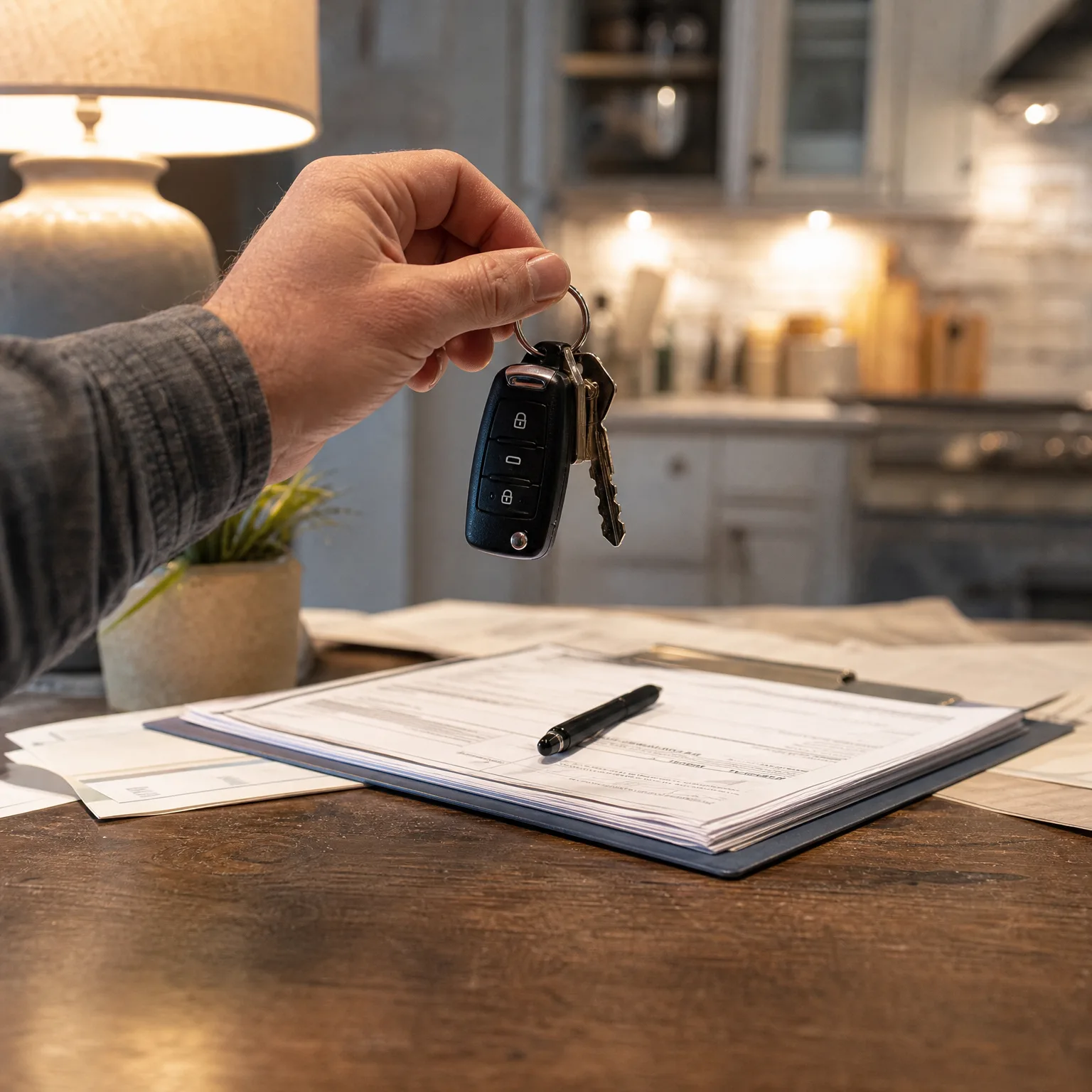
Nebraska gives you a grace period to add a newly purchased vehicle to your existing policy, but the length of that grace period depends on your carrier, not state law. Most carriers cover a new vehicle automatically for 14 to 30 days after purchase if you already insure at least one vehicle with them, but you must report the new vehicle within that window or coverage lapses.
When you add a vehicle mid-term, the carrier re-rates the policy immediately and charges you the prorated premium for the remainder of the term. The new vehicle's premium is not simply added on top — the entire policy is recalculated, the multi-car discount is reapplied, and you pay the difference. If the new vehicle is higher-risk than your existing cars, the total premium increase will be larger than the per-vehicle rate you were quoted.
Removing a vehicle mid-term works the same way in reverse. The carrier recalculates the policy without that vehicle, removes its portion of the premium, and refunds the prorated amount. If you drop from three vehicles to two, you lose the third-vehicle discount tier, and the remaining two vehicles may cost slightly more per car than they did when all three were on the policy.
9.5%
Nebraska Uninsured Motorist Rate
Nearly one in ten drivers on Nebraska roads carries no insurance. Uninsured motorist coverage protects you when one of them causes a crash.
Insurance Research Council, 2023

When Minimum Coverage Is Not Enough for Multiple Vehicles
Minimum coverage meets the legal requirement to register and drive, but it does not cover your own vehicle damage or your own medical bills if you cause a crash. When you insure two or three vehicles on one policy, you are protecting multiple assets with a single liability limit that applies per accident, not per vehicle.
If you cause a crash while driving one of your insured vehicles and the other party's damages exceed your $25,000 property damage limit, you pay the difference out of pocket. Your other vehicles are not protected by a separate pool of coverage — the policy limit is shared across every car and every driver on the policy. If your household owns vehicles worth more than the minimum limits cover, or if you have assets a lawsuit could reach, minimum coverage leaves you exposed.
Compare Carriers That Write Multi-Vehicle Minimum Policies in Nebraska
Not every carrier offers competitive rates for households insuring multiple vehicles at minimum limits. Some carriers specialize in multi-car policies and apply larger discounts to the second and third vehicles; others charge nearly the same per-vehicle rate whether you insure one car or four. The only way to know which carrier saves you money is to compare quotes with every vehicle and every driver listed exactly as they will appear on the policy.
Nebraska has 21 carriers writing auto insurance in the state, and most of them will quote a multi-vehicle minimum-coverage policy online or through an agent. Start with carriers that write standard and non-standard policies — Geico, Progressive, State Farm, Allstate, Farmers, and Dairyland all write multi-car policies in Nebraska and offer online quotes. Enter every vehicle by VIN, list every household driver, and compare the total annual premium across at least three carriers before you buy.
How Carriers Structure Multi-Vehicle Minimum Policies
Every vehicle on the policy must be listed by VIN, and every household member with a license must be listed as a driver or explicitly excluded. The carrier assigns each driver to a primary vehicle, and the premium reflects the riskiest driver-vehicle pairing on the policy. If you add a third car and your teenager is the primary driver, that vehicle's portion of the premium will be higher than the other two, even though all three carry the same minimum limits.
The multi-car discount applies to the total premium after the carrier calculates each vehicle's base rate. The discount percentage varies by carrier — some apply it to every vehicle after the first, others apply a larger discount to the third and fourth vehicles. You will not see the discount broken out separately on most declarations pages; it is embedded in the per-vehicle premium. Comparing total policy cost across carriers is the only way to know which structure saves you money when you insure multiple vehicles at minimum limits.
Get Your Free Quote
Get My Nebraska Car Insurance QuoteFrequently Asked Questions
What is the minimum car insurance required in Nebraska?
Nebraska requires $25,000 bodily injury per person, $50,000 bodily injury per accident, $25,000 property damage, and uninsured motorist coverage at the same limits. You must carry both liability and uninsured motorist coverage to register a vehicle.
Does Nebraska require uninsured motorist coverage?
Yes. Nebraska mandates uninsured motorist coverage at the same limits as your liability coverage unless you reject it in writing. Most carriers add it automatically and will not let you opt out when you apply online.
Can I insure multiple cars on one minimum-coverage policy in Nebraska?
Yes. One policy can cover two or more vehicles at minimum limits, and most carriers apply a multi-car discount that reduces the per-vehicle premium. Every vehicle on the policy must meet the state's liability and uninsured motorist requirements.
How long do I have to add a new vehicle to my Nebraska policy?
Most carriers cover a newly purchased vehicle automatically for 14 to 30 days if you already insure at least one vehicle with them, but you must report the new vehicle within that window. The grace period length depends on your carrier, not state law.
What happens if I cause a crash and my minimum coverage is not enough?
You pay the difference out of pocket. Nebraska's minimum $25,000 property damage limit applies per accident, not per vehicle, so if the other party's damages exceed that amount, you are personally liable for the remainder.
Do I need SR-22 insurance to meet Nebraska's minimum coverage requirement?
SR-22 is not insurance — it is a certificate your carrier files with the Nebraska DMV proving you carry at least minimum liability and uninsured motorist coverage. You need SR-22 only if the state suspended your license and ordered you to file proof of insurance for a set period, typically three years.