
Full Coverage Car Insurance Cost — Nebraska
Free to compare
What Full Coverage Means in Nebraska
You're deciding whether to carry full coverage on your household's vehicles, and you need to know what that term actually means in Nebraska. Full coverage is not a single product — it's a shorthand for a policy that combines liability coverage with collision and comprehensive physical-damage coverage. In Nebraska, that baseline is broader than you might expect.
Nebraska requires liability coverage at $25,000 per person, $50,000 per accident for bodily injury, and $25,000 for property damage. The state also mandates uninsured motorist coverage, which protects you when the other driver has no insurance. Full coverage adds collision (pays for damage to your car in an at-fault crash) and comprehensive (pays for theft, weather, vandalism, and animal strikes). You're not starting from liability alone — you're adding physical-damage coverage to a policy that already includes UM.
“Nebraska mandates uninsured motorist coverage, so full coverage adds only collision and comprehensive to a broader base than most states require.”
Compare Nebraska Car Insurance Quotes Today
Get My Nebraska Car Insurance Quote$25,000 / $50,000 / $25,000
Nebraska Minimum Liability Limits
Nebraska requires $25,000 per person and $50,000 per accident for bodily injury liability, plus $25,000 for property damage. These are the floor amounts; full coverage builds on this base by adding collision and comprehensive.
Nebraska Department of Motor Vehicles
Why the Uninsured Motorist Mandate Matters
Nebraska's uninsured motorist requirement changes the cost structure of full coverage. In states where UM is optional, adding full coverage means jumping from liability-only to liability plus UM plus collision plus comprehensive — four coverage additions. In Nebraska, you're already carrying UM by law, so full coverage adds only collision and comprehensive to your existing policy.
This matters when you're comparing quotes across multiple vehicles. The incremental cost of full coverage is lower in Nebraska than in states where UM is optional, because you're not paying for that layer twice. If you're insuring two or three cars, the per-vehicle cost difference between liability-plus-UM and full coverage is narrower than the national average suggests.
The state's 9.5% uninsured motorist rate — nearly one in ten drivers — makes the UM mandate a structural protection. You're not deciding whether to buy UM coverage; you're deciding whether to add physical-damage coverage to a policy that already protects you from uninsured drivers.
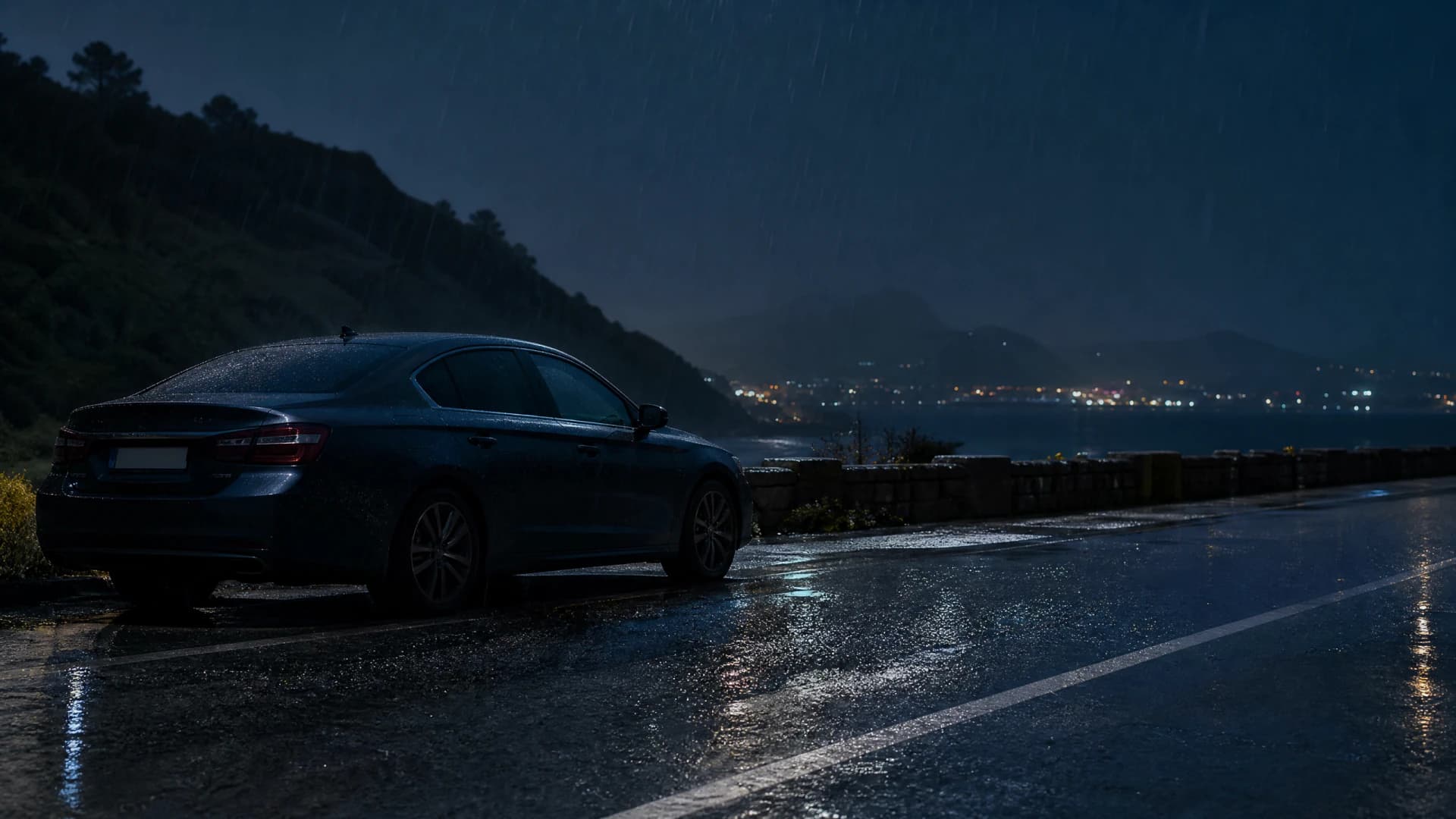
Nebraska mandates uninsured motorist coverage, so full coverage adds only collision and comprehensive — not the four-layer jump most drivers expect.
Related Articles



How Vehicle Value Shapes the Full Coverage Decision
The decision to carry full coverage depends on what each vehicle is worth. Collision and comprehensive pay actual cash value at the time of loss, not replacement cost.
A common threshold: when a vehicle's value drops below ten times the annual cost of collision and comprehensive, the coverage stops making financial sense. The older car still carries liability and UM as required by law; you're just not insuring its physical value anymore.
When you add or remove physical-damage coverage on one vehicle, the policy re-rates. Carriers price collision and comprehensive per vehicle, but removing coverage from one car can shift the multi-car discount calculation. Compare the premium change across the whole policy, not just the vehicle you're modifying.
9.5%
Nebraska Uninsured Motorist Rate
Nearly one in ten Nebraska drivers operates without insurance. The state's mandatory uninsured motorist coverage protects you from this exposure whether you carry full coverage or not.
Insurance Information Institute, 2023
Structuring Coverage Across Multiple Vehicles
When you insure multiple vehicles on one policy, you choose collision and comprehensive coverage per vehicle. You are not required to carry the same coverage on every car. A household with a 2022 truck, a 2015 sedan, and a 2010 hatchback can carry full coverage on the truck, liability-plus-UM on the sedan, and liability-plus-UM on the hatchback. The policy remains valid as long as every vehicle meets Nebraska's liability and UM minimums.
Carriers apply the multi-car discount at the policy level, not per vehicle. Dropping physical-damage coverage on one car does not eliminate the discount, but it does change the base premium the discount applies to. The result: your total premium drops, but not by the full per-vehicle cost of collision and comprehensive, because the discount recalculates on the new lower base.
Compare Carriers Writing Nebraska Multi-Vehicle Policies
Nebraska's carrier market includes 21 insurers writing auto policies in the state, including national carriers and regional specialists. Not every carrier offers the same multi-vehicle discount structure, and not every carrier prices collision and comprehensive the same way across multiple cars. State Farm, GEICO, Progressive, Allstate, and Farmers all write multi-car policies in Nebraska; regional carriers like Auto-Owners and Shelter also operate here.
When you're structuring full coverage across multiple vehicles, compare quotes from at least three carriers. The carrier with the lowest liability-plus-UM rate may not have the lowest full-coverage rate, and the carrier with the best multi-car discount on liability may price collision and comprehensive higher. Request quotes with full coverage on all vehicles, then request quotes with selective coverage — full on the newest car, liability-plus-UM on the others — to see how each carrier's pricing responds to mixed coverage levels.
What Collision and Comprehensive Actually Cover
Collision pays for damage to your car when you hit another vehicle, a fixed object, or roll over — regardless of fault. If you back into a pole, sideswipe a guardrail, or get rear-ended and your car is totaled, collision covers the repair or replacement cost minus your deductible. Deductibles typically run $500 or $1,000 per vehicle. Collision does not cover theft, weather, or animal strikes.
Comprehensive pays for everything else: theft, hail, flood, fire, vandalism, hitting a deer, falling tree branches, and windshield damage. Nebraska's rural roads and agricultural landscape make animal strikes a frequent claim type — comprehensive is the coverage that pays when you hit a deer on Highway 2 or a pheasant on a county road. Comprehensive also carries a deductible, often lower than collision because the risk profile is different.
Get Your Free Quote
Get My Nebraska Car Insurance QuoteFrequently Asked Questions
What is full coverage car insurance in Nebraska?
Full coverage in Nebraska means a policy that combines the state's required liability and uninsured motorist coverage with collision and comprehensive physical-damage coverage. Collision pays for damage to your car in an at-fault crash; comprehensive pays for theft, weather, vandalism, and animal strikes. Nebraska already mandates UM, so full coverage adds only two layers, not four.
Does Nebraska require full coverage car insurance?
No. Nebraska requires liability coverage at $25,000 per person, $50,000 per accident for bodily injury, and $25,000 for property damage, plus uninsured motorist coverage. Collision and comprehensive are optional unless your lender requires them. You can legally drive with liability-plus-UM only.
How much does full coverage cost in Nebraska for multiple cars?
Premium depends on each vehicle's year, make, model, value, and your driving record. Carriers price collision and comprehensive per vehicle, and the multi-car discount applies at the policy level. Comparing quotes from three or more carriers is the only way to see what your household's specific vehicles will cost.
Can I carry full coverage on one car and liability-only on another?
Yes. Nebraska allows you to choose collision and comprehensive coverage per vehicle. A household with three cars can carry full coverage on the newest vehicle and liability-plus-UM on the other two. Every vehicle must meet the state's liability and UM minimums.
When should I drop full coverage on an older vehicle?
A common threshold: when the vehicle's value drops below ten times the annual cost of collision and comprehensive, the coverage stops making financial sense.
Does dropping collision and comprehensive affect my multi-car discount?
The multi-car discount applies at the policy level, not per vehicle. Dropping physical-damage coverage on one car does not eliminate the discount, but it changes the base premium the discount applies to. Your total premium drops, but not by the full per-vehicle cost of the coverage you removed.